
The Ultimate 2025 Tax Preparation Checklist from Starner Tax Group Rogers helps you collect all necessary tax documents, including W-2s, 1099s, and other vital forms, for a smooth tax filing experience. Perfect for individuals, freelancers, and small businesses aiming to complete their tax prep efficiently.
—
Preparing for the 2025 Tax Season
The 2025 tax season is coming up fast. You want to get ready early. Using a solid 2025 tax document checklist can help you keep track of what you need. This makes it easier to meet all IRS tax requirements without last-minute stress. When you prepare on time, your tax filing becomes smoother and less of a headache.
Importance of Early Tax Preparation
Starting your taxes early has some big perks:
- Accurate Tax Reporting: Collecting your papers in advance cuts down mistakes.
- Avoid Refund Delays: Filing sooner means your refund gets processed faster.
- Faster Refunds: The quicker you file, the sooner the money hits your account.
- Secure Access: Keeping your documents safe now saves you from panicking later.
If you follow good tax planning advice, you’ll handle the season with less trouble.
Key Tax Deadlines for 2025
Knowing when things are due helps you stay on top of taxes. Check these important dates:
| Deadline | Description |
|---|---|
| January 31 | Employers must send out W-2 forms |
| February 15 | Deadline for some 1099 forms |
| April 15 | Federal income tax return due |
| Various Dates (Quarterly) | Estimated tax payments throughout the year |
Don’t forget about state tax forms; their deadlines might differ. Using electronic filing (e-filing) speeds up sending your taxes and lowers errors.
By sticking to your checklist and watching these dates, you’ll keep calm and ready when it’s time to file.
The Ultimate 2025 Tax Document Checklist
Getting ready for your 2025 taxes means gathering the right papers. This ultimate tax checklist lists all common and essential tax forms you’ll need. Keeping year-end tax documents neat saves time and cuts mistakes. It also helps get the biggest refund or lowers what you owe.
Personal Information
Before looking at income or deductions, check your personal info:
- Employer Identification Number (EIN): Needed if you run a business or work for yourself.
- Identity Protection PIN: If the IRS gave you one, use this six-digit code to stop identity theft.
- Filing Status Update: Check if your marital status or number of dependents changed since last year.
- Prior Year Tax Returns: Keep copies handy to check past info and carryovers.
These items start your filing right and confirm who you are during processing.
Income Documents
Reporting income correctly is key. Gather all papers showing taxable income like:
- Paychecks from jobs
- Interest from bank accounts
- Dividends from stocks or funds
- Earnings from freelancing or gigs
- Income from renting property
Complete income statements keep you IRS-compliant and avoid audits for missing info.
Understanding Your W‑2 Form
Your employer sends a W‑2 form that shows wages and withheld taxes. Here’s what to know about W‑2 forms:
- Employers give them by January 31 each year.
- They list federal, state, Social Security, and Medicare taxes taken out.
- Check every box carefully; mistakes can hold up refunds.
If you had several jobs in 2025, get a W‑2 form from each employer before filing.
Navigating 1099 Forms (NEC, MISC, K, etc.)
Different 1099 forms report income that isn’t wages. Freelancers and contractors use these a lot:
| Form Type | What It Shows | Common Uses |
|---|---|---|
| 1099-MISC | Misc payments | Rent, prizes |
| 1099-NEC | Nonemployee pay | Freelance jobs |
| 1099-K | Payment card or third-party | Gig economy apps like Uber |
| 1099-DIV | Dividends | Investment payouts |
| 1099-INT | Interest | Bank interest |
Make sure you have all forms for freelance or investment income. Missing them can cause IRS letters later.
Deductions and Credits
Deductions cut your taxable income; credits reduce what you owe directly. To claim these:
- Check if you qualify based on IRS rules.
- Gather papers like receipts or official forms.
- Keep deduction paperwork neat for easy filing.
Good records help prevent refund delays linked to deductions or credits.
Common Tax Deductions to Consider
Here are some deductions folks often forget:
- Home office deduction – You must prove the space is used only for work
- Medical expense receipts – Only costs above a set percent of your income count
- Student loan interest forms – Usually on Form 1098-E
- Business expenses receipts – Travel, supplies bought just for work
Looking over these might add more deductions when backed by proof.
Maximizing Tax Credits for 2025
Tax credits save money but come with rules:
- Earned Income Tax Credit (EITC) applies if wages are under limits
- Child Tax Credit depends on kid’s age and your adjusted gross income
- Premium tax credits help those buying insurance through marketplaces
Get credit eligibility documents early so you don’t miss out on money back.
Following this checklist of important tax documents—from personal ID info to tricky deduction papers—gets you set for accurate filing next tax season. For extra help with your case, using groups like Starner Tax Group Rogers makes things easier and helps claim every benefit allowed by law.
Organizing Your Tax Documents
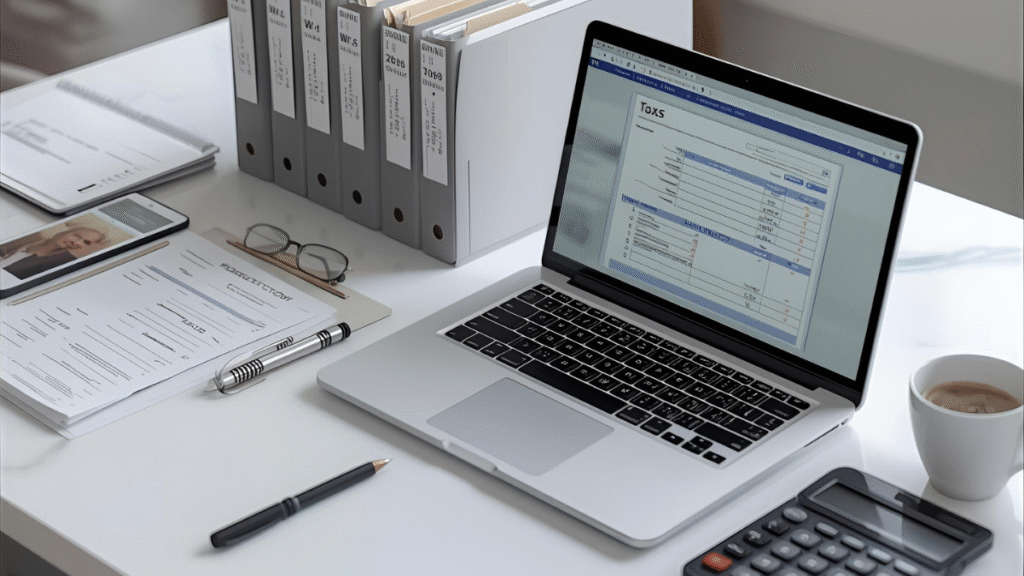
Keeping your tax paperwork organized helps your tax season go smoothly. A tax document organizer holds all your important tax forms, year-end tax documents, and personal finance records in one spot. This way, you cut down on mistakes and save time when you do your taxes.
First, gather essential tax forms like W-2s, 1099-INT (interest income), 1099-DIV (dividends), donation receipts, mortgage papers, and any other financial docs you need. Put them in labeled folders or digital files to keep your organized tax records tidy all year.
Year-end tax documents come at different times. Keeping them together stops you from missing anything when filing. Update your organizer often with new statements or receipts to get ready on time and report correctly.
Step-by-Step Guide to Document Organization
Here’s an easy-to-read checklist to help you set up a system for your taxes:
- Collect All Relevant Documents: Grab pay stubs, investment reports, expense receipts, healthcare forms like Form 1095-A, and last year’s returns.
- Sort by Category: Separate income from jobs and business papers if needed.
- Label Clearly: Use folders or digital tags named “Wages,” “Interest Income,” or “Charitable Contributions” for quick finding.
- Use a Tax Document Organizer Tool: Try apps or spreadsheets made for tracking tax info.
- Keep Personal Finance Records Handy: Bank statements and loan interest papers can affect deductions.
- Review Periodically: Check that you have all needed papers before filing.
- Backup Digital Copies: Scan paper docs so you don’t lose them by accident.
This comprehensive guide gives practical tax tips that help make filing less stressful and get things ready on time.
What to Do If You’re Missing Tax Documents
If some important papers go missing—like IRS correspondence from before—you can still fix it:
- Ask your employer or bank for duplicate W-2s or 1099s.
- Use IRS Form 4506-T (“Request for Transcript of Tax Return”) to get past returns which might have what you need.
- Look over last year’s filed returns carefully; they often show employer IDs useful when asking for copies.
Fix missing documents quickly because incomplete paperwork can hold up refunds or cause audits.
When you keep organized tax records with a good system and know how to handle missing items fast, your tax season gets easier every year.
Sources: IRS.gov – Forms & Instructions; National Association of Tax Professionals
Tax Filing Options for 2025
When you get ready to file your federal income tax return for 2025, it helps to know your options. You’ll need tax filing documents like W-2s, 1099-INT forms, and receipts from donations. These papers help you make an accurate tax return.
The IRS provides official IRS tax forms and state tax forms. You have to submit them before the tax filing deadlines.
E-filing, or electronic filing, is the quickest and safest way to send your federal and state returns. Online tax software can make this easier and help you avoid mistakes. Plus, e-filing usually gets your refund to you faster than mailing a paper form.
Keep these tips in mind:
- Gather all your documents before starting.
- File by the deadline—usually April 15—unless there’s an extension.
- Use authorized e-file providers or trusted online software for accuracy and security.
If you want more info on deadlines or forms, check IRS.gov.
Choosing the Right Filing Status
Picking the right filing status changes how you meet income tax filing requirements. It also affects your standard deduction and which dependent exemption documents you can claim.
There are five main filing statuses:
- Single
- Married Filing Jointly
- Married Filing Separately
- Head of Household
- Qualifying Widow(er)
Sometimes your filing status updates because of life events like marriage or divorce during the year. So, it’s smart to check this before you file.
Each status gives a different standard deduction amount. For example, in 2025, single filers get less than married couples filing jointly. That difference can change how much taxable income you report.
Make sure to have proof for any dependents you claim since that impacts exemptions and credits.
Choosing the right status helps lower your taxes or increase your refund while keeping things legal with the IRS.
Tax Filing Methods: DIY, Professional, or Software
You have three main ways to file your taxes:
Do-It-Yourself (DIY):
Good if your finances are simple without tricky investments or business income. Many people use easy-to-use tools like online software that guide you step-by-step and check for errors as you go.
Professional Assistance:
If your situation is more complex—like self-employment income or multi-state filings—it helps to hire a qualified tax preparer. Make sure they have proper credentials such as CPA (Certified Public Accountant), enrolled agent (EA), or tax attorney licenses. These pros offer solid support based on experience.
Volunteer Income Tax Assistance (VITA):
This free service is run by IRS-trained volunteers for low-to-moderate-income folks who want help preparing returns securely.
No matter which method you pick, choose platforms with secure access to protect your private info during filing and submission stages.
| Method | Best For | Key Benefit |
|---|---|---|
| DIY Software | Simple Returns | Cost-effective & convenient |
| Professional Preparer | Complex Finances | Expert advice & accuracy |
| Volunteer Assistance | Low-Income Filers | Free service & guided support |
Pick the option that fits your needs well. This saves time and leads to a more accurate tax return that follows current rules.
Tax Tips for Small Businesses and Freelancers
Getting your taxes ready as a freelancer or small business owner works best with good bookkeeping. Keep your tax records neat and updated all year. This way, income reporting gets easier and you stay on the right side of tax rules. Use software or simple spreadsheets to follow all your income—from freelance gigs, sales, or any other work.
Tax planning helps you pay less tax legally. Spot tax write-offs early by sorting expenses like office supplies, travel costs, and hired services. Always keep receipts tidy so you can prove these deductions if asked.
Follow filing deadlines and payment dates closely. Freelancers should make quarterly estimated tax payments to avoid fines for paying too little. Check your numbers often and adjust payments if needed.
By keeping good books and planning ahead, you can get more money back without breaking any IRS rules.

Unique Considerations for Self-Employed Individuals
Self-employed folks have different rules for reporting income than regular workers. You’ll need forms like Schedule C (Profit or Loss from Business) and Schedule SE (Self-Employment Tax) when filing taxes.
Freelance income usually comes on forms like 1099-MISC or 1099-NEC. If you work gigs without those forms, you still must report that money. Keep detailed notes of every payment all year long.
Most self-employed people who expect to owe $1,000+ in taxes pay quarterly taxes. These cover income tax plus self-employment Social Security taxes.
Knowing these details helps you avoid missed filings or paying less than you owe—both cause penalties later.
Maximizing Deductions for Small Businesses
Small businesses can cut their taxable income by claiming expenses with the right paperwork:
- Business Expenses: Save receipts with dates and what was bought (like supplies, utilities, ads).
- Home Office Deduction: Keep floor plans and bills showing space used only for work.
- Mileage Logs: Write down trips with dates, miles driven, and why it was business-related.
- Business Meals: Hold onto receipts plus notes about who attended and why; usually half the cost counts.
Good records like mileage logs prove your claims if the IRS checks up on you. The home office deduction needs proof the space is only for business—that’s a common audit spot.
Meals count when tied directly to business but only half the amount usually counts—exceptions exist (like employee parties).
Keeping careful records and tracking expenses lets small businesses claim what’s allowed without risking trouble later on.
For help with your 2025 taxes—especially if you want advice on tricky deductions—you might want to talk to professionals at Starner Tax Group Rogers who know freelancing and small business taxes well.
